



Less ball rolling in Flamengo's games in the Brasileirão
By Flamengo Communication - in
Flamengo's recent games in the Brazilian Championship have exposed a worrying fact: the constant drop in the ball's playing time and a slow pace imposed, in most cases, by excessive and unnecessary interference from the referees. Last Thursday (02), against Cruzeiro, at Maracanã, the first half recorded the shortest time of the ball in play of the entire season.
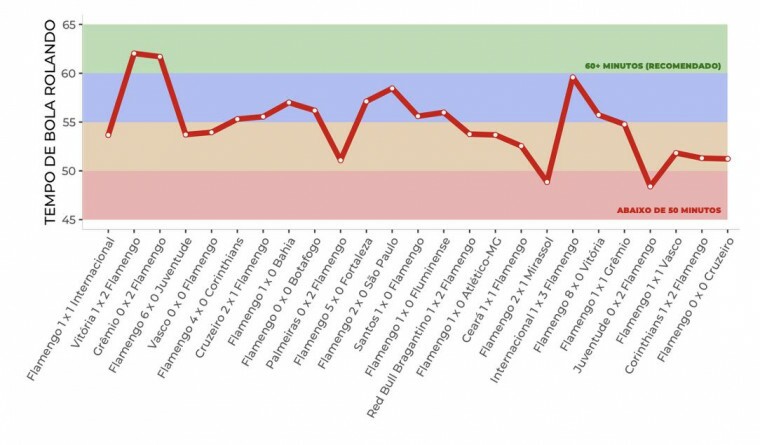
An internal survey shows that Flamengo's last four matches—against Juventude, Cruzeiro, Corinthians, and Vasco—are among the six worst in terms of effective playing time in the competition. The pattern is clear: the referees have been calling fouls at the slightest contact, showing rigidity with one or two-meter throw-ins, allowing successive stoppages, calling non-existent fouls, lengthening review periods, and disrupting the rhythm of matches by preventing the ball from circulating for the minimum amount of time necessary.
The international recommendation is at least 60 minutes of ball play. But in practice, most of Flamengo's recent matches have been well below this figure. The graph highlights the trend: while at the beginning of the competition the club recorded numbers close to the expected average, today the reality is games that are slow, with constant interruptions and little football.
This situation isn't just a statistic. Excessive stoppages compromise the quality of the show, harm fans, and directly affect teams that rely on technique and possession to impose their game. For Flamengo, every minute lost to unnecessary arguments and interruptions means less time to play football.
More than just a curious and alarming fact, this excerpt reveals a real concern about the conduct of matches, precisely at a crucial moment in the 2025 Brasileirão. Brazilian football needs to align with international best practices, ensuring a playing time commensurate with the stature of the clubs and the championship. After all, fans deserve more action and fewer interruptions.
