



Numbers illustrate the battle that took Flamengo to the CONMEBOL Libertadores semifinals
By Flamengo Communication - in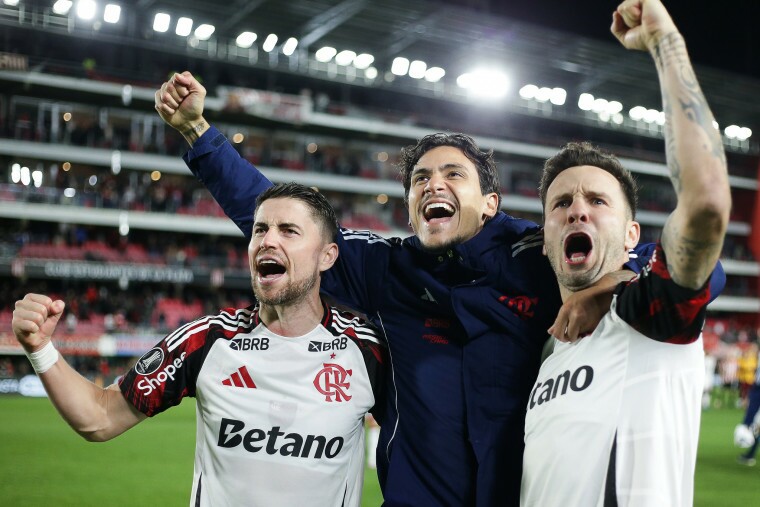
In the heat of the match, or right after the final whistle, it's not always possible to analyze what happened on the field calmly and in-depth. The next day, when poring over the performance reports, some scenarios become clearer. Flamengo's qualification for the CONMEBOL Libertadores semifinals, achieved on penalties against Estudiantes last Thursday (25), was the result of an extremely demanding and challenging match. Beyond the tense scoreboard, the numbers reflect how much the duel tested the physical, technical, and mental strength of the red-and-black team.
Flamengo finished the game with 64% possession, compared to just 36% for their opponents. In the second half, they reached 71%! Despite controlling the action for most of the match, the Flamengo defense faced the highest volume of aerial duels in the final third of the entire season, reflecting Estudiantes' constant pressure in that area of the field.
Above average physical performance
Physical performance data also confirms the squad's preparedness. The team covered an average of 11,1 km per player during the match—a higher rate than recorded throughout the season. Within this volume, the intensity also stood out: they averaged 1,27 km at high intensity, another higher number than usual.
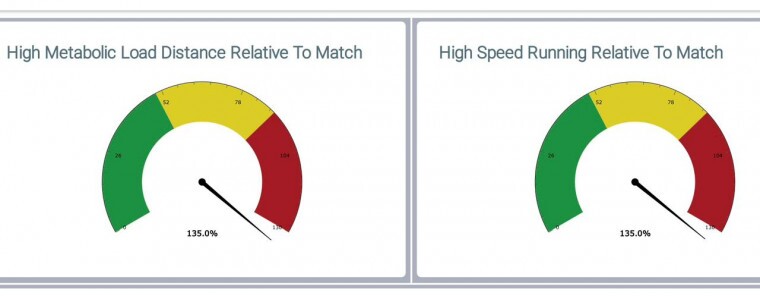
Another indicator that reinforces this level of commitment is High Metabolic Load Distance (HMLD), a metric that measures the distance covered in high-intensity efforts such as sprints, accelerations, and decelerations. This indicator combines distance with the frequency of these highly physically demanding movements, more accurately reflecting the body's effort on the field. In the match against Estudiantes, Flamengo achieved 135% of the average in HMLD and also in high-speed runs, figures that illustrate how the team maintained maximum intensity from start to finish.
By delving into individual metrics, it's possible to better understand how challenging this classification was. Saúl ran the most: 12,3 km in total, reaching a high-intensity 1,76 km—a personal best for the season. Guillermo Varela also stood out, covering 11,7 km, with 1,65 km at high intensity. In attack, Samuel Lino ran 11 km in total and an impressive 1,99 km at high intensity, one of the highest rates on the team. Pedro, in 58 minutes on the field, ran 6,6 km—a performance that, proportionally, places him among the highest-intensity players of the night. Something similar happened with Arrascaeta, who was substituted in the 77th minute of the game with an impressive 9,7 km of total distance. Considering the ratio of meters per minute, this was the Uruguayan's third-best mark of the year. Finally, Alex Sandro and Jorginho, who were returning from injury, demonstrated full recovery with 10,8 km and 11,9 km covered, respectively.
Preparation that makes a difference
The numbers highlight not only the intensity of the match, but also the squad's preparation to face challenges of this magnitude, the result of multidisciplinary work. With athletes breaking individual records and the entire team dedicated, Flamengo showed, on the field and in the data, that it is ready to continue its journey toward achieving its goals this season.
