



Flamengo brings together clubs and athletes in a seminar on promoting Black culture in sports.
By Communication - in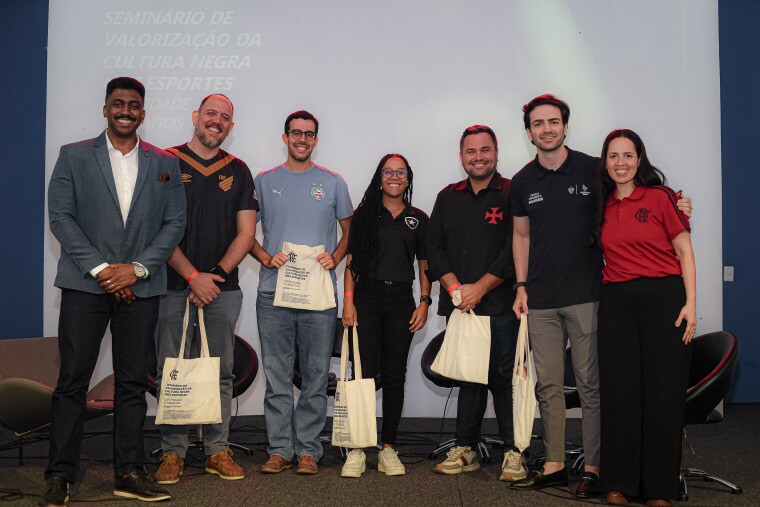
As part of the actions for Black Awareness Day, Flamengo held the seminar “Valuing Black Culture in Sports: Identity and Challenge” this Tuesday (November 18th) at 2 pm at the Museum of Afro-Brazilian History and Culture (Muhcab), in downtown Rio, in partnership with the Municipal Secretariat of Culture. The event brought together representatives from Athletico Paranaense, Atlético Mineiro, Bahia, Botafogo and Vasco, as well as Olympic athletes from Flamengo, to discuss anti-racist issues and the transformative role of sport in society.
The presentation was led by Emerson Santos, commentator for FlamengoTV, along with Ricardo Campelo, vice-president of Social Responsibility at Flamengo, and Lavito Bacarissa, president of the Sustainable Development Goals Commission.
Big Clubs, Big Responsibilities: The Anti-Racist Agenda in Sports Institutions
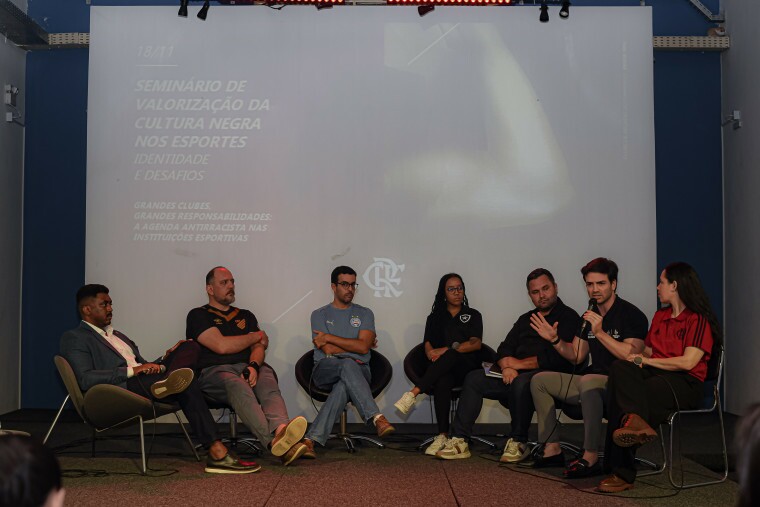
Representatives from five Brazilian clubs joined Camila Nascimento, Flamengo's Social Responsibility Manager, to discuss the legacy the club is working to leave: ensuring that Black people can occupy any position within the sport. Nelson Barros Neto, Bahia's Content Coordinator, cited the club's firm stance in the Gerson case, while Vasco's historian Walmer Peres addressed the literacy programs offered to players and fans of the club.
Also during the debate, Rubens Neves, director of Funcap (Athletico Paranaense Foundation), highlighted the creation of the club's complaints channel, while Débora Froquet, coordinator of People and Culture at SAF Botafogo, reported the definitive banning of a fan-member involved in an act of racism at the stadium. Henrique Muzzi, director of Communication at Instituto Galo, reinforced that many more seminars like this are needed for football to evolve on this issue.
The presence of the clubs on the panel reinforced the social role of football as an agent of transformation and showed that the cause transcends rivalry in favor of society.
First-Person Accounts: Black Experiences in Sports
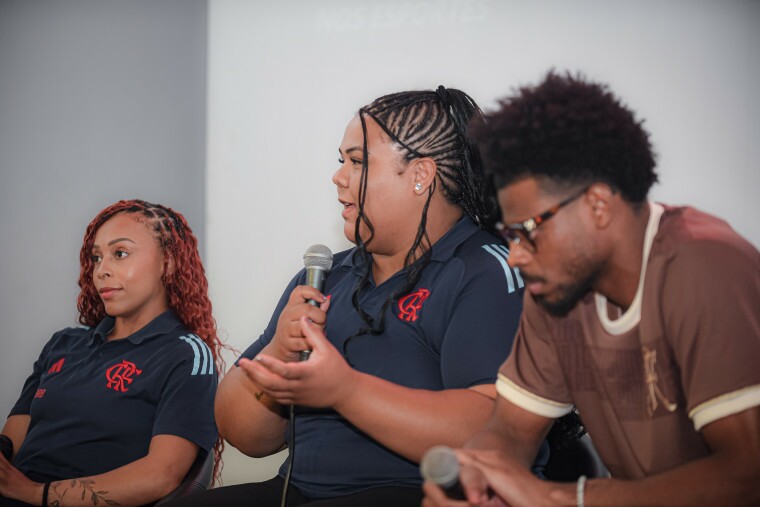
Real stories of overcoming adversity, courage, and pride set the tone for the panel, which reinforced the essential role of athletes in building a more just and egalitarian society. Lorrane Oliveira, artistic gymnast and Olympic medalist in Paris, moved the audience by stating: "I wish that Black people continue to be at the top of gymnastics, achieving what we deserve." Gui Deodato, shooting guard for Flamengo's basketball team and the Brazilian National Team, emphasized the need for everyone's involvement: "May everyone seek racial literacy in pursuit of the common good." Giovanna Santos, "Gigi," a two-time Brazilian judo champion (2023/2024), envisions "a future where there is no unfair preoccupation with skin color."
The discussion was moderated by Ingrid David, a specialist in Ethnic-Racial Relations and Accessibility and a strategist for Impact Investing, who guided the dialogue on career paths, challenges, experiences of confronting racism, and the importance of representation for young Black people who dream of a sports career.
Anti-racist Training in Sports: Paths and Experiences
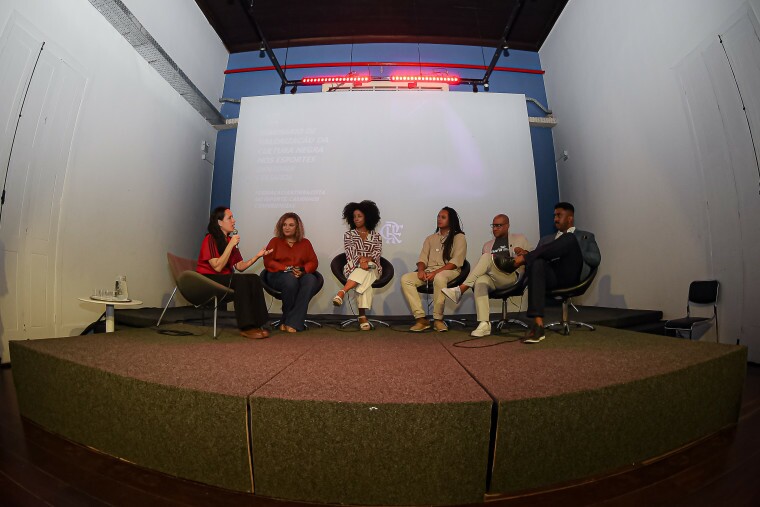
Professionals and institutions directly involved in promoting anti-racist education shared practices and reflections on how to build a fairer, more conscious, and prejudice-free sporting environment. Participants in the debate included Mario Love, from the Central Única das Favelas (CUFA); Barbara Azeo, cultural manager and advisor to the Complementary Network of Cultural Facilities of the Rio Municipal Culture Secretariat; Yago Feitosa, Master in Education of Ethnic-Racial Relations from UFRRJ and manager of the Complementary Network of Cultural Facilities of the Rio Municipal Culture Secretariat; and Vitor Matos, Master in Public Policies in Human Rights from UFRJ and general coordinator of Affirmative Actions in Education at the Ministry of Racial Equality.
Flamengo's anti-racist practices throughout the year.
In 2025, Flamengo consolidated its anti-racist commitment with a historic measure: the inclusion of new paragraphs in the Club's Statute, making the fight against racism non-negotiable in all its spheres — sports, social, cultural, and professional training. The clause establishes severe penalties for discriminatory practices, such as suspension and expulsion of members, dismissal of employees, and termination of service provider contracts, reinforcing that the fight against racism must guide all the club's actions.
In addition to the statutory change, Flamengo promoted racial literacy training for athletes in the following sports: soccer (youth and women's teams), judo, basketball, rowing, and volleyball, as well as educators from the Jogaremos Juntos social project. The activities were conducted by specialized professionals and recognized institutions, such as CUFA, the Municipal Secretariat of Culture, and ID_BR, with the aim of broadening understanding of racism, strengthening critical awareness, and encouraging attitudes of respect, equity, and responsibility both inside and outside of competitions.
About Flamengo's Social Responsibility
At Flamengo, Social Responsibility isn't a matter of isolated actions, but rather a continuous movement that unites Education, Social Inclusion, Sustainability, Health, and Quality of Life. Each initiative represents our commitment to transforming realities and reinforces the club's role as an active agent in building a more just and sustainable society.

